

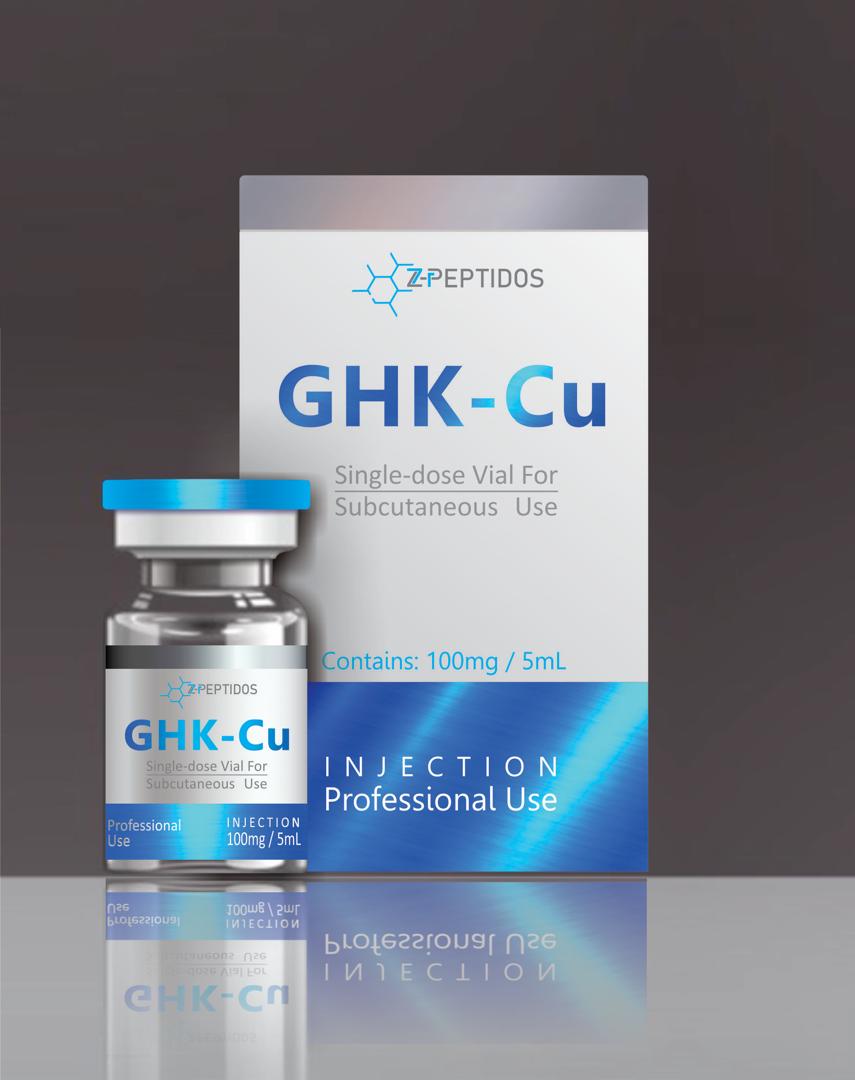
GHK-cu
GHK-Cu is a naturally occurring copper-binding tripeptide complex (glycyl-L-histidyl-L-lysine) that has been extensively documented in biochemical literature for its role in cellular signaling, extracellular matrix modulation, and tissue regeneration research. In laboratory studies, the GHK-Cu complex has garnered significant attention for its capacity to influence collagen synthesis pathways and promote cellular repair mechanisms through copper-mediated interactions.
Technical Research Standards
In professional research environments, GHK-Cu is typically handled under strict laboratory conditions to maintain its structural integrity. Advanced research applications require compounds with high-purity profiles, often verified via High-Performance Liquid Chromatography (HPLC) to ensure data accuracy in experimental models. For traceability, scientific protocols emphasize the use of batch-tracked and clearly labeled reference materials.
Core Biochemical Features
-
Available Research Concentrations: Commonly studied in 50 mg or 100 mg lyophilized formats.
-
Chemical Identity: GHK-Cu (Copper-1 Tripeptide).
-
Purity Profile: High-purity, laboratory-grade formulation ($\ge$99% verified by HPLC analysis).
-
Format: Sterile, lyophilized powder optimized for laboratory stable environments.
Scientific Background
GHK-Cu is a small, naturally occurring tripeptide that binds to copper ions ($Cu^{2+}$) to form a biologically active complex. Current research indicates that this complex can modulate the synthesis of collagen and glycosaminoglycans, as well as influence angiogenesis and tissue remodeling processes. Due to these protective properties, GHK-Cu remains a primary focus in regenerative medicine and dermatological research studies.
Chemical Identification Data
-
Synonyms: Copper-1 tripeptide, Copper Glycyl-L-histidyl-L-lysine.
-
CAS Number: 49557-75-7.
-
Molecular Weight: ~340.9 g/mol.
Technical Specifications for Research
-
Physical Form: Blue lyophilized peptide (characteristic color due to copper ion complexation).
-
Assay Purity: $\ge$99% (HPLC).
-
Solubility: Soluble in sterile or bacteriostatic water for laboratory-controlled applications.
-
Storage Protocols: Recommended refrigeration at 2–8 °C for short-term stability. For long-term preservation of molecular structure, temperatures below -20 °C are standard in research facilities.
⚠️ MANDATORY RESEARCH DISCLAIMER
ATTENTION: The information provided on this page regarding GHK-cu is for strictly educational, informational, and laboratory research purposes only. This website does not sell, distribute, or promote the human consumption of peptides or coenzymes.